besucherzentrum wildpark | visitor center animal park
pforzheim
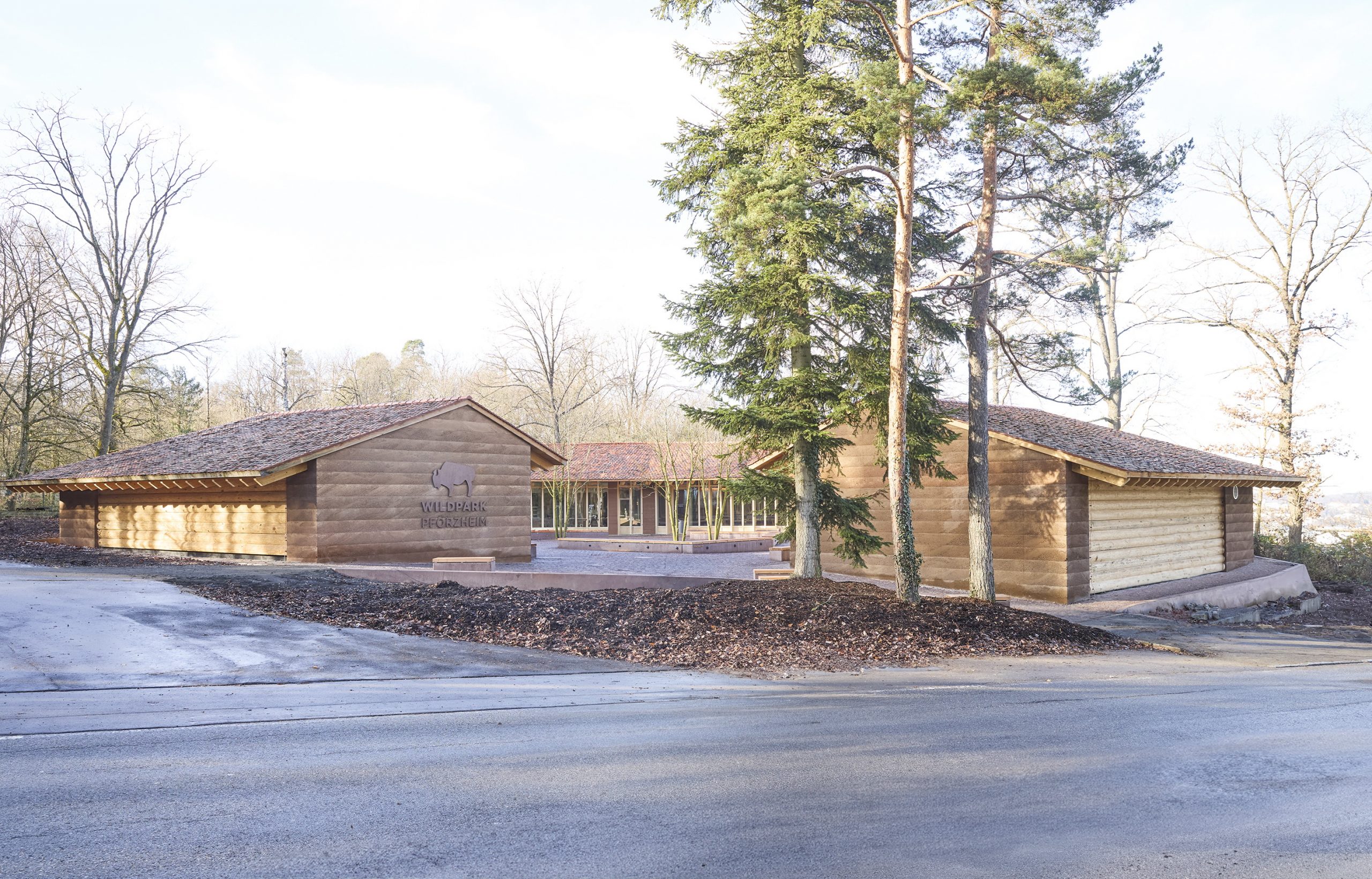
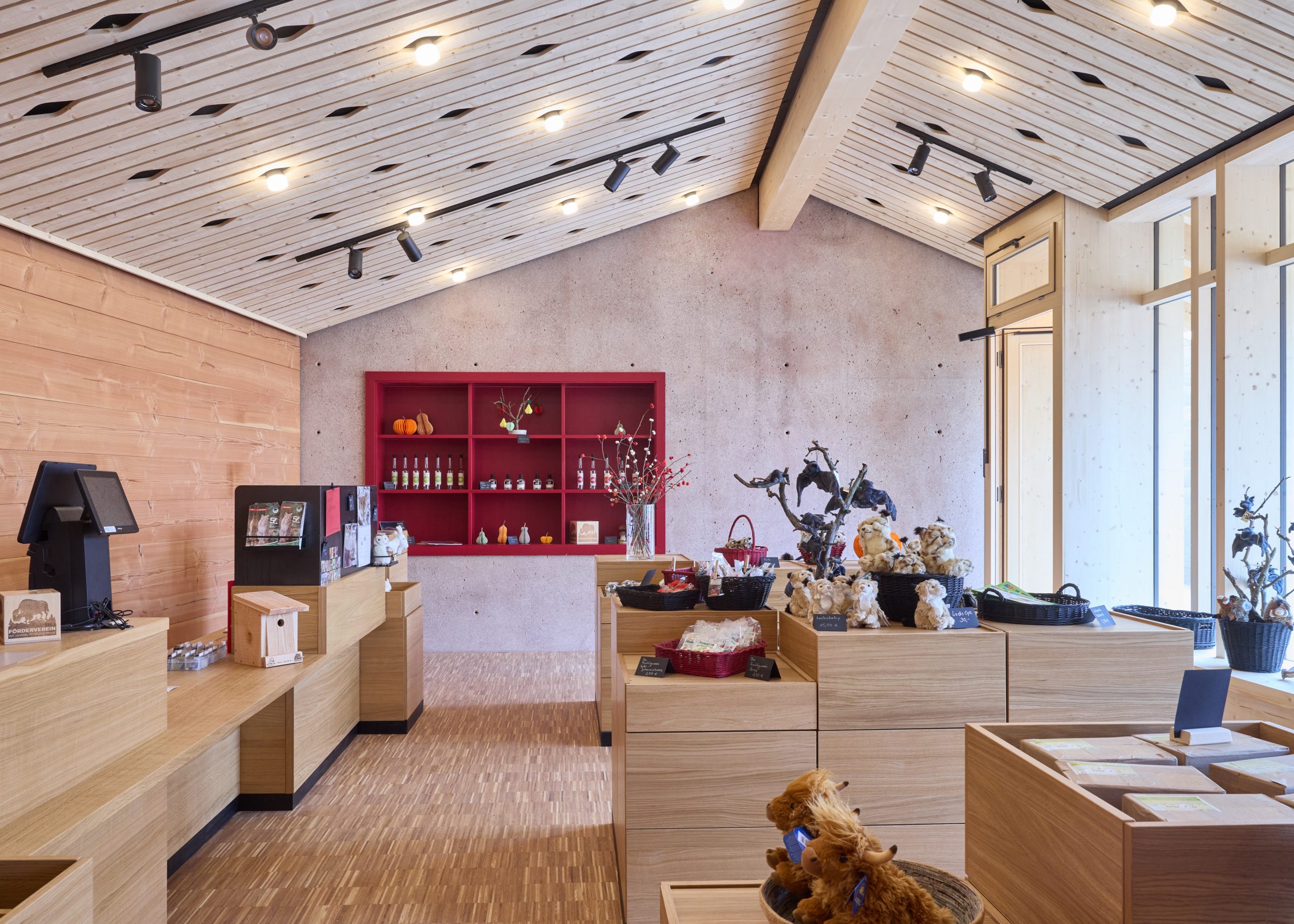
der förderverein wildpark pforzheim e.v. realisierte 2025 die neugestaltung des eingangsbereichs zum wildpark im bereich zum übergang zur Tiefenbronner Straße. hierfür wurden die in die jahre gekommenen hölzernen servicegebäude zurückgebaut und an selber stelle durch ein neues besucherzentrum ersetzt, welches atmosphärisch, funktional und technisch den zeitgenössischen anforderungen entspricht.
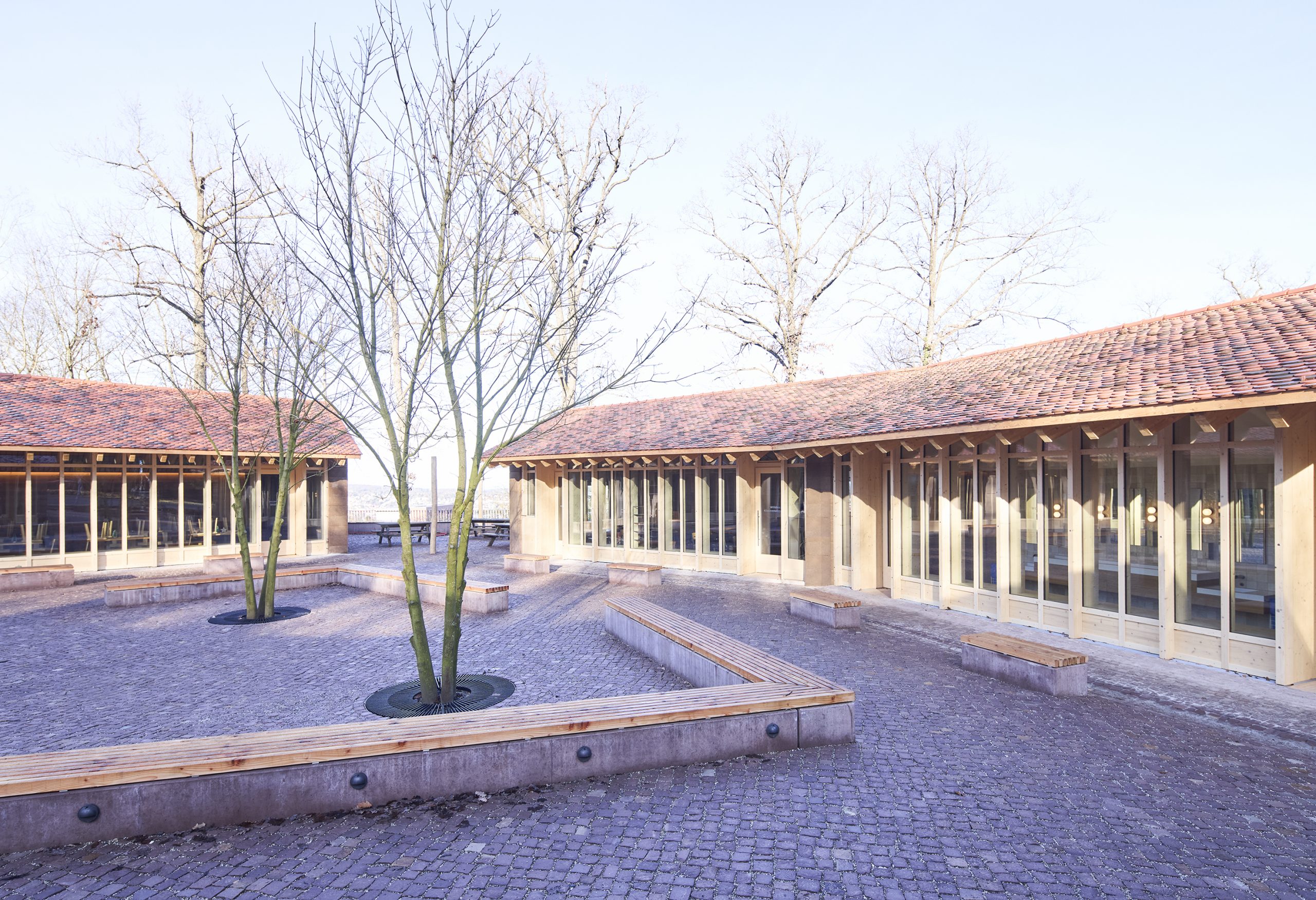
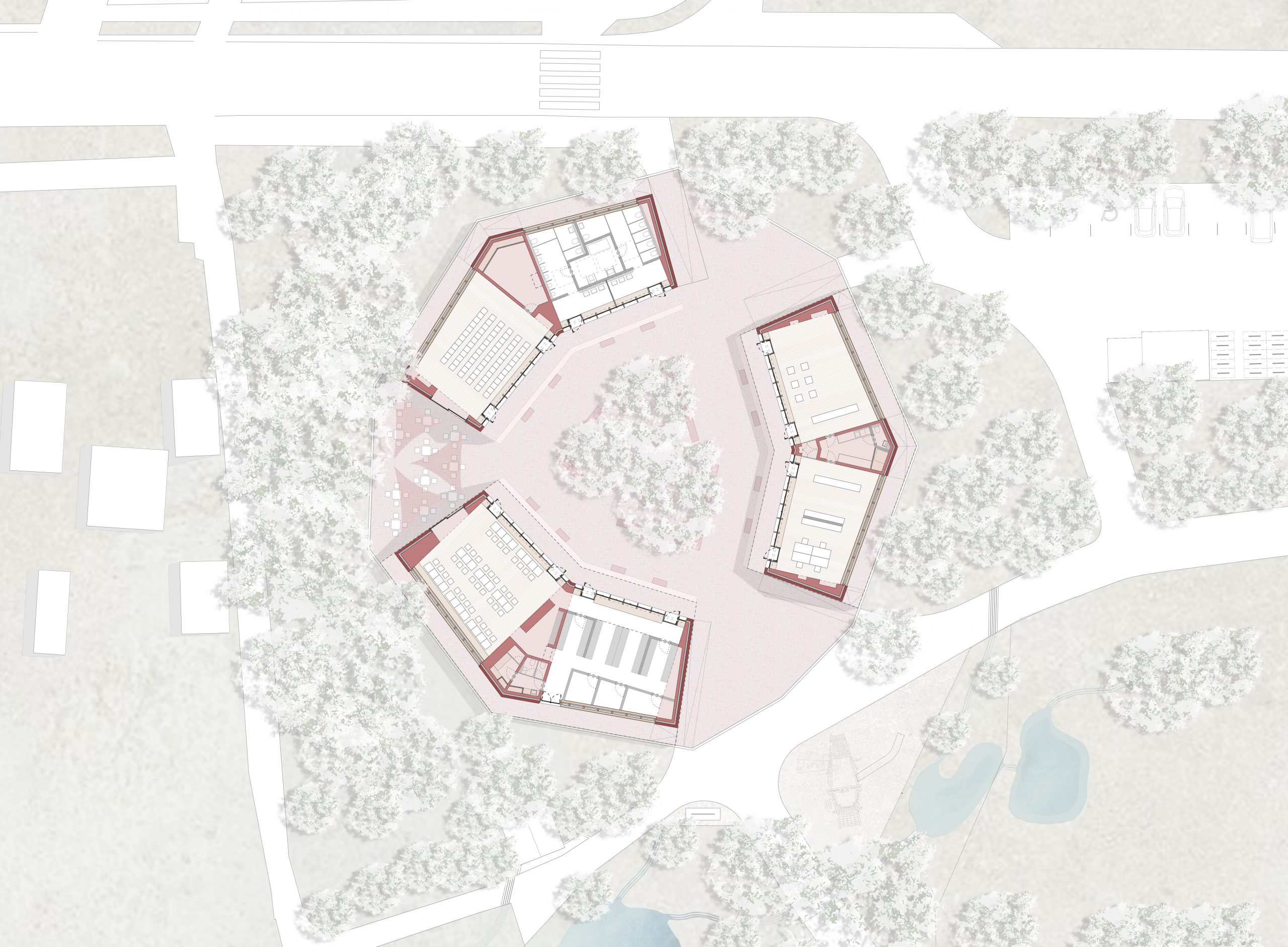
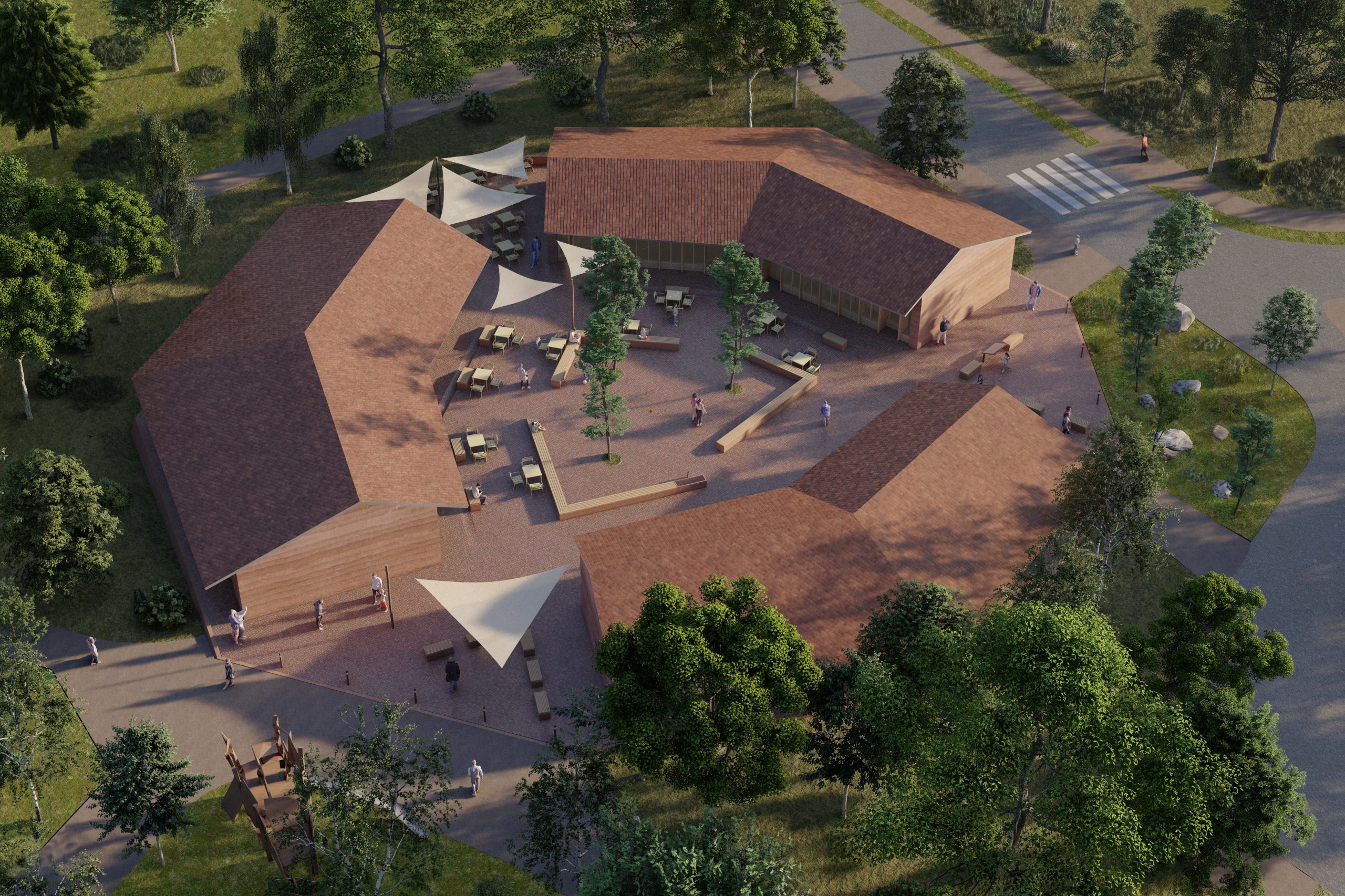
projektziel war die gestaltung eines erlebnisraums, welcher sich in die narrative themenwelt der aufwendig gestalteten gehege und freianlage einfügt und als zentraler treffpunkt sowie kommunikationsraum mittels seiner funktionalen Infrastruktur den bedürfnissen der besucher dient. ausgehend von der archaik und der urtümlichkeit der gehegegestaltung wird die assoziative anlehnung an typologie und organisation der urdörfer indigener völker zum leitbild der entwurfsidee des besucherzentrums. drei kreisförmig angeordnete gebäude definieren und begrenzen einen klar gefassten schutzraum mitten im wald, einen urbanen dorfplatz im kontrast zur ursprünglichkeit der umgebenen landschaft.
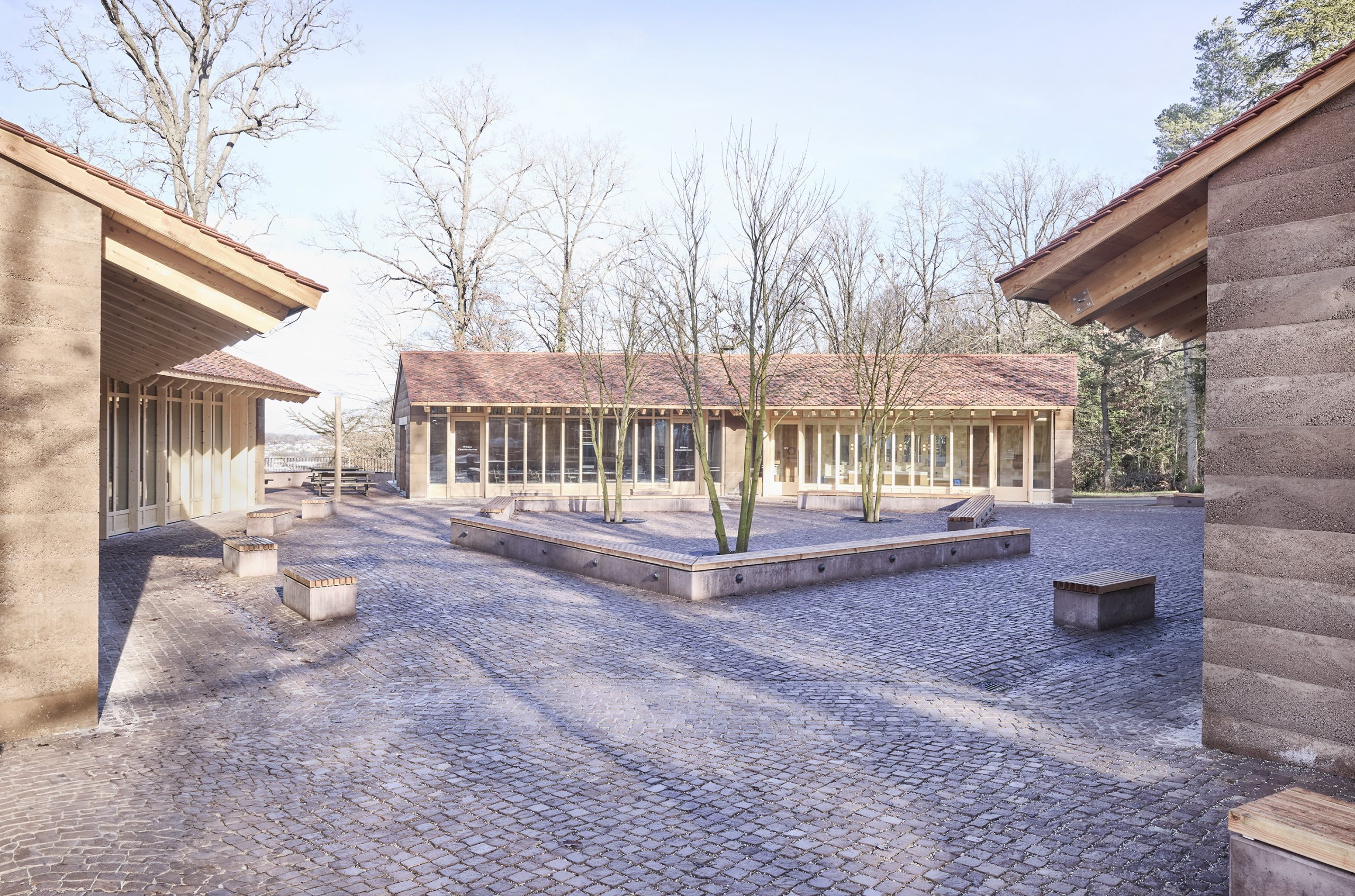
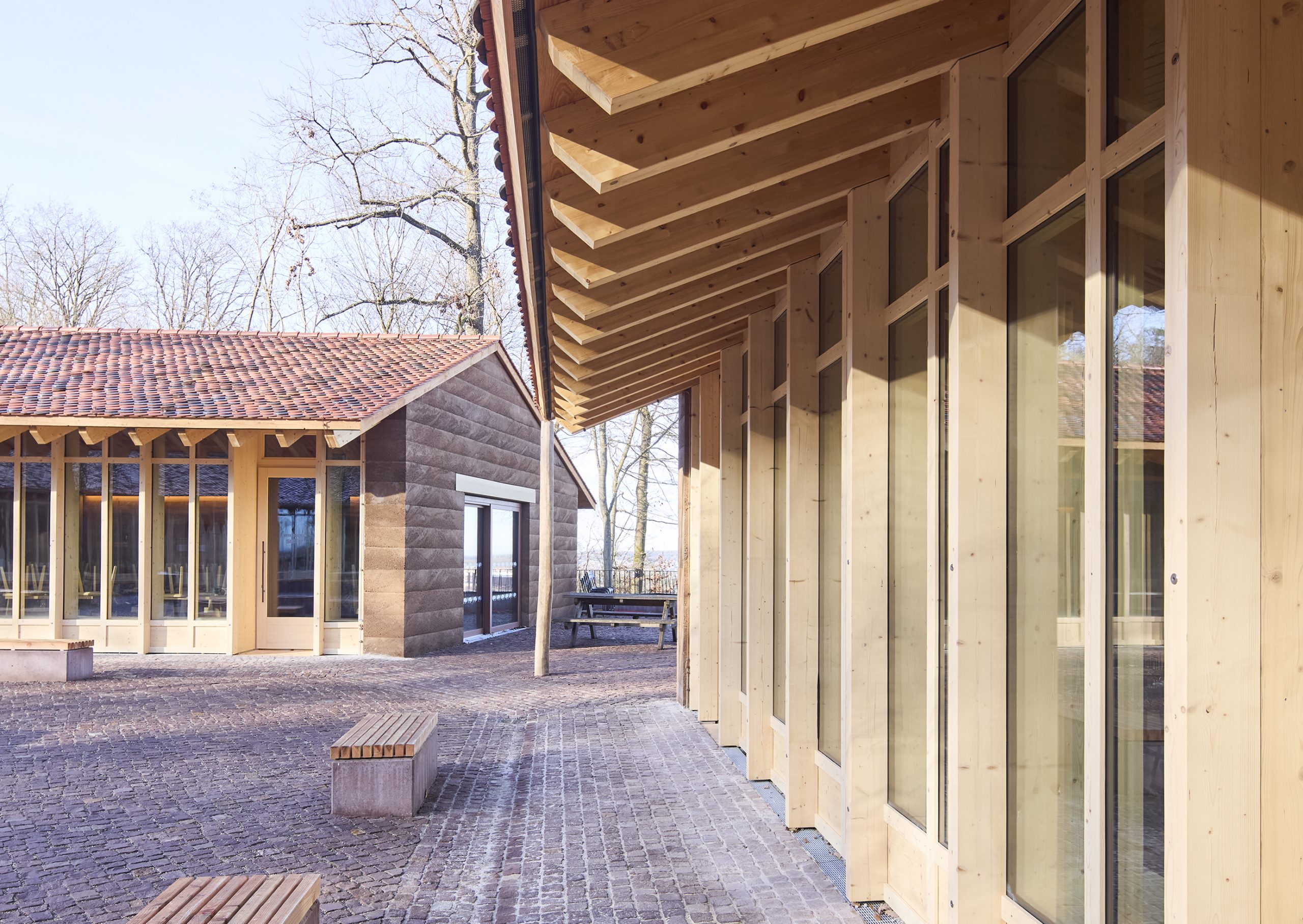
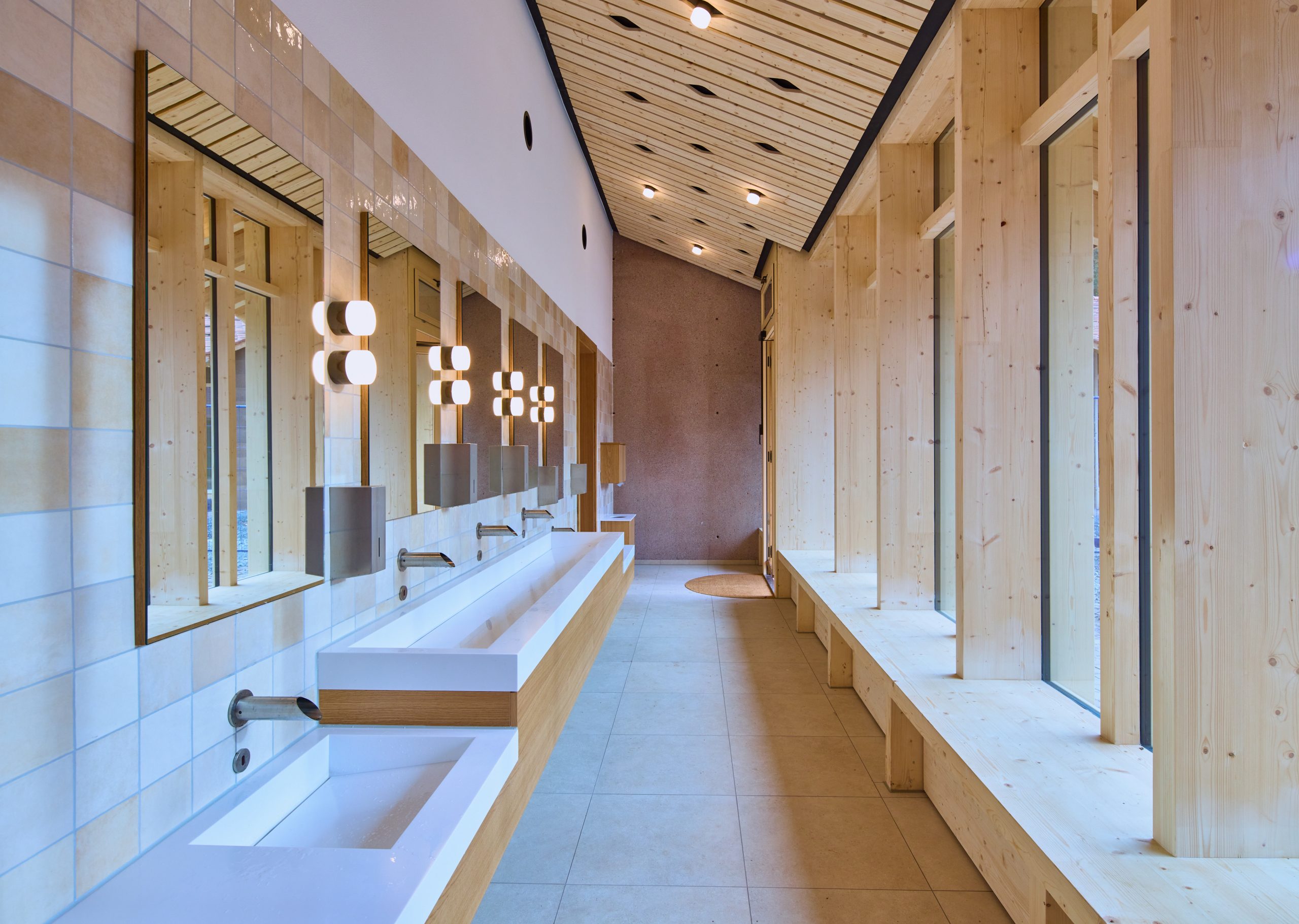
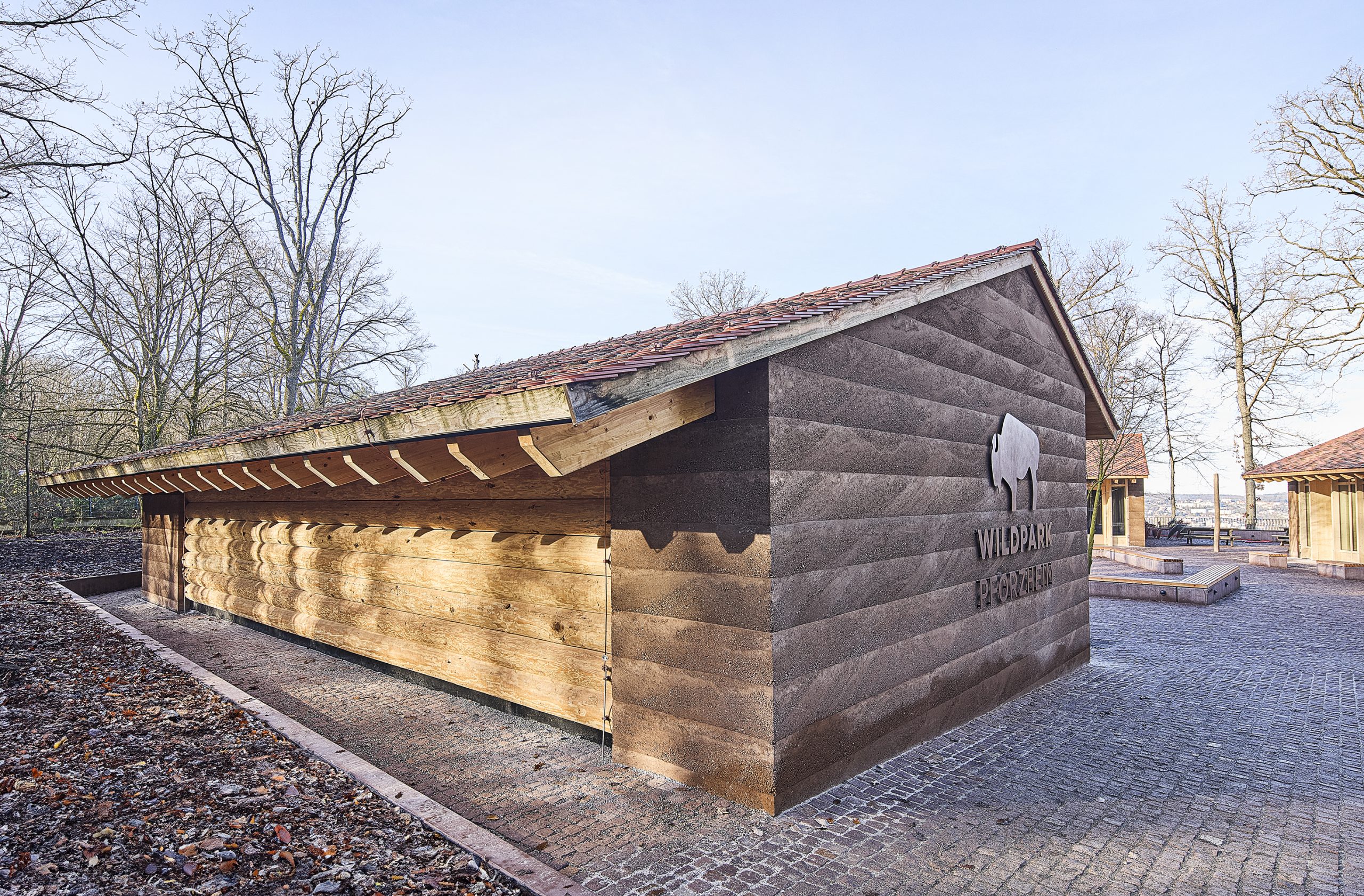
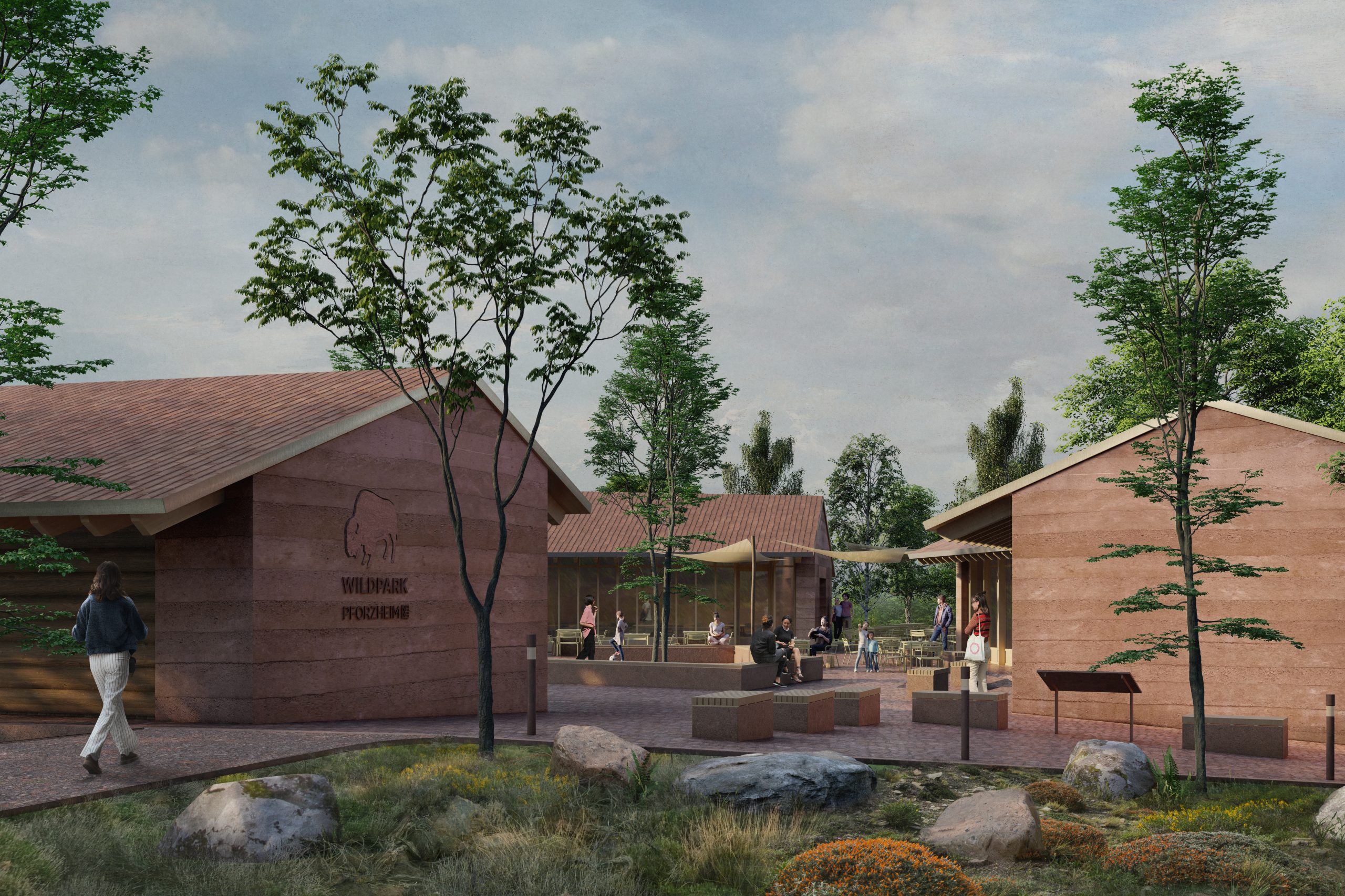
alle räume des besucherzentrums orientieren sich zentrisch auf den zentralen platz. die weit ausladenden vordächer der eingeschossigen baukörper bilden eine gedeckte übergangszone zwischen den funktionszonen mit dem platzbereich. die introvertierte gesamtanalage wird an drei stellen trichterförmig aufgebrochen, um zugänglichkeit und durchlässigkeit zu ermöglichen, auch um zusätzliche funktionszonen zu verorten. dem archaischen leitbild des urdorfs entsprechend werden die gebäude mit scheinbar der umgebung entnommenen materialitäten gefügt: lehm, ton, stein, sand, kies und holz bilden den materialmix der holz-beton-hybridbauten. alle drei baukörper verbindet das gemeinsame ensemblebildende konstruktionsprinzip. neun massive stampfbetonbauteile, welche in einer art steinkreis um den platz angeordnet sind, bilden die primäre tragstruktur der ausladenden, mit rauen und größtenteils recycelten handstrichbiberziegel gedeckten dächer. zur waldseite werden die räume umlaufend durch massive blockwände geschlossen. zur platzseite orientiert werden die materialien nun moderner, feiner, filigraner. die umlaufende, gläserne pfosten-riegel-fassade schafft raumhoch durchlässigkeit. das ensemble gliedert sich in sechs funktionsbereiche: infopoint, förderverein, grünes klassenzimmer mit multifunktionsraum, toiletten, gastraum und küche. die materialisierung des platzbereichs orientiert sich an der materialisierung der gebäude. drei bewusst platzierte bäume dominieren die szenerie des platzes: rötliche stampfbetonbänke gliedern den platz um die bäume und erhöhen die aufenthaltsqualität. gespannte sonnensegel an naturstammstehlen definieren den bereich der außengastronomie. das künstliche plateau, gepflastert mit buntsandstein, welches der gesamten anlage als basis dient, ist behutsam zwischen schützenswerten bäumen gebettet. das besucherzentrum ergänzt somit den wildpark um einen weiteren narrativen, nachhaltigen baustein und bildet die neue bedeutungsvolle adresse eines wichtigen treffpunkts der bürger der stadt und des umlands.
auszeichnungen:
beispielhaftes bauen enzkreis und pforzheim 2026
__
visitor center animal park
pforzheim
the ‚förderverein wildpark pforzheim e.v.‘ realized the redesign of the entrance area to the wildlife park in 2025 at the transition to tiefenbronner straße. the outdated wooden service buildings were dismantled and replaced at the same location by a new visitor center that meets contemporary requirements relating to atmosphere, functionality, and technology.
the aim of the project is to create a vibrant space that reflects the narrative of the elaborately designed enclosures and open areas and serves visitors‘ needs while also being a central meeting point and communication space thanks to its functional infrastructure. inspired by the archaic and primal character of the enclosure design, the associative reference to the typology and organization of the first villages of indigenous peoples became the guiding principle for the visitor center. three buildings arranged in a circle define and delimit a clearly defined shelter in the middle of the forest, an urban village square in contrast to the originality of the surrounding landscape.
all rooms of the visitor center are oriented towards the central square. the expansive canopies of the single-story buildings form a covered transition space between the functional areas and the square. the introverted complex is broken up into a funnel shape in three places to foster accessibility and permeability and to facilitate locating additional functional zones. in keeping with the traditional model of the ancient village, the buildings are constructed of materials that appear to be sourced from the surroundings: mud, clay, stone, sand, and wood constitute the material mix of the wood-concrete hybrid buildings. all three structures are connected by the shared construction principle, resulting in an ensemble. nine massive tamped concrete elements, which are arranged in a kind of stone circle around the square, form the primary supporting structure of the expansive roofs covered with crude, hand-painted plain tiles. on the side abutting the forest, the rooms are closed all around by solid block walls, which clearly convey the logic of the construction to the visitor. oriented towards the square, the materials are now more modern, fine, and delicate. the surrounding folding glass wall creates ceiling-high permeability and can be flexibly opened onto the space.
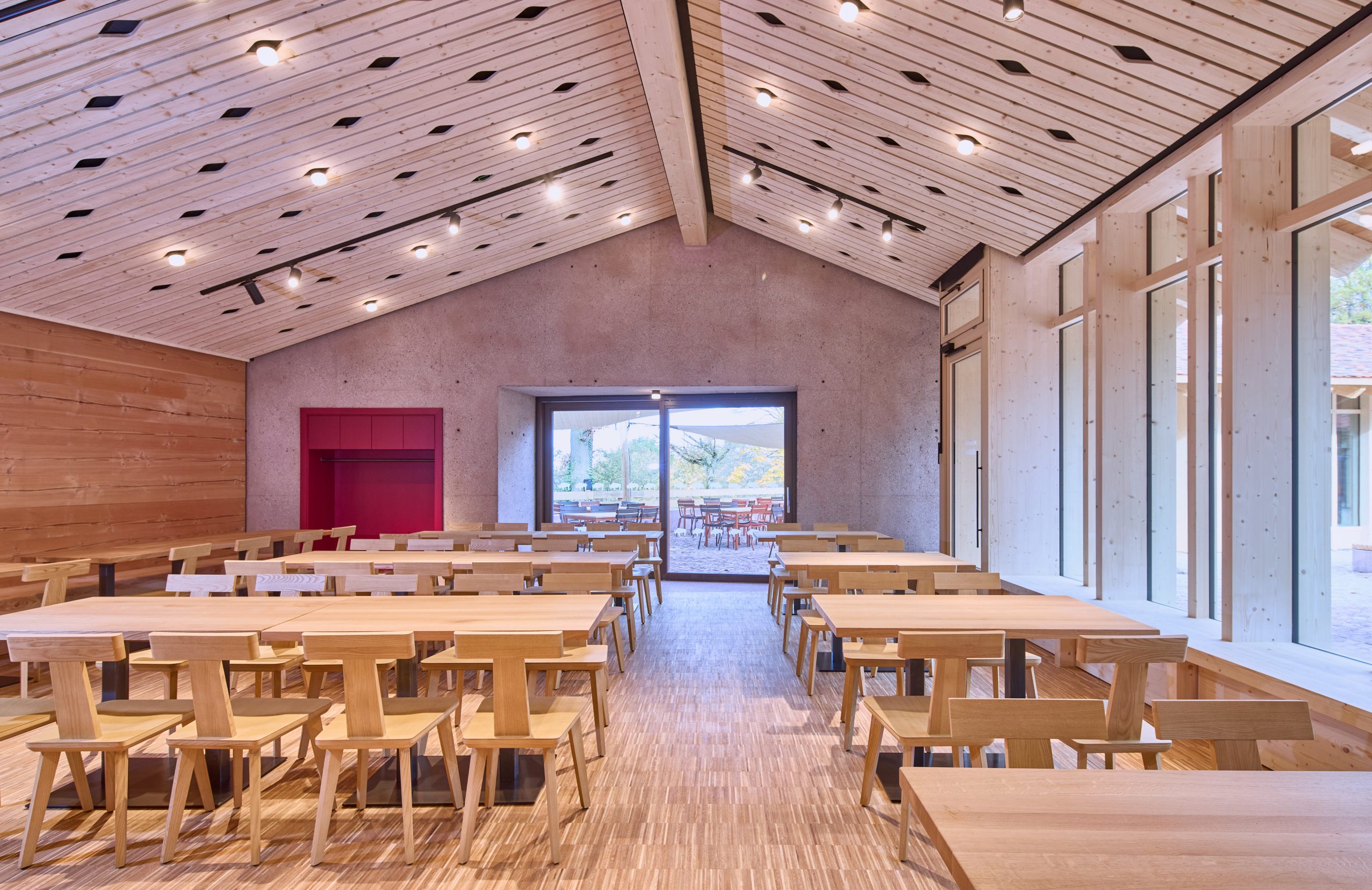
the ensemble is divided into six functional areas: an information point, a foundation office, a green classroom with a multifunctional space, restrooms, a guest room, and a kitchen. the materialization of the square and its immediate surrounding space is based on the materialization of the buildings. a solitary tree dominates the square visually: reddish tamped concrete benches structure the space around the solitary tree and elevate the quality of place. tensioned sunshade sails suspended on the natural tree trunks define the outdoor dining area. the artificial plateau, which serves as the basis for the entire complex, is carefully nestled between established trees. the visitor center thus complements the wildlife park with a new narrative, sustainable building block and forms the new and important meeting point for the citizens of the city and its surroundings.
awards:
beispielhaftes bauen enzkreis und pforzheim 2026
team: simon adolphi, pablo andré, frederick gorsten, franziska heller, stefanie larson, holger lohrmann, céline muller, stina schumacher, maximilian stengele, caroline thaler, carolin vogt
fotos / photos: volker schrank
publikationen:
cube stuttgart 02/2026